
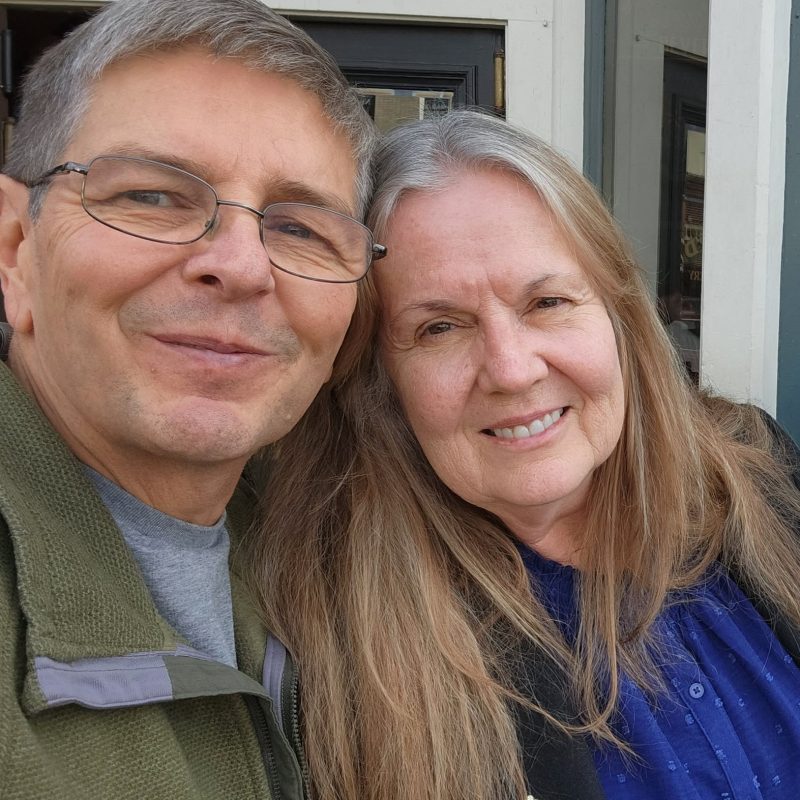
The short version: On October 10, 2026, I received a kidney transplant at Vanderbilt after years of Stage 5 kidney failure and dialysis. My wife named the kidney Grace. It is working better than anyone expected. I’m grateful for this gift, and I’m working to help other patients share their stories and find donors.
Hi, I’m Jim. For over 40 years, I’ve been solving problems as an operations and quality management professional. I’ve worked in manufacturing, aerospace, semiconductors – even built my first websites in the mid-1990s when most people were still figuring out email. I’ve spent my career helping companies run better and mentoring people along the way – teaching everything from quality systems and risk management to business process development and manufacturing operations. If there’s a way to make a system work more efficiently, I’ve probably taught someone how to do it. I’ve faced challenges before. But I never expected this one. After years of Stage 5 kidney failure and dialysis, on October 10, 2026, I received a kidney transplant.
My Journey
In 2015, we lost my mother to kidney failure. Watching her decline, seeing what dialysis took from her quality of life – I knew what this disease could mean. But I never imagined I’d be walking the same path. While she had more medical issues when diagnosed, it doesn’t lessen the severity of my own diagnosis.
I was “officially” diagnosed in 2021, while living in Idaho and working in the semiconductor industry. This was during the infamous Covid shutdown and while working from home, I stood up one day at my desk and almost fell down. Given the cold weather at the time, I attributed this dizzy spell to a sinus infection or something similar. When I went in to see the doctor, I was fortunate that I was assigned to a sports medicine doctor who was building his practice, and he was thorough and methodical in his approach. The sinus infection was there, at a low level, but he wanted me to do blood work to rule out anything else. Results came back within about five days, and the key indicator that something else was going on was my creatinine levels were way above where they should’ve been.
I’ve always been one of those people that thought “as long as I feel okay, I don’t need to visit the doctor.” No annual checkups, only in to see a doctor when I was in an immediate need situation. So at first I thought, “okay, this is something I can get under control.” Not so. His next words were “I am getting you a referral to a nephrologist” and that’s where this part of the journey started. By June of 2021 I was officially diagnosed with Stage 4 CKD (chronic kidney disease), which is a gradual loss of kidney function over time, often due to conditions like diabetes or high blood pressure. Something I just took for granted as “I have a job that can be stressful, so sometimes my blood pressure goes up.” Never did I ever think that one of the two “silent killers” (diabetes being the other one) would take me down this road, but here I am.
A New Reality
For several years I managed my remaining kidney function, and worked to slow the progression, by watching my diet to reduce sodium, potassium and phosphorus as best I could. It is amazing to think that, growing up, we never really thought a lot about what we ate, in what quantities, and what was in it. It’s an eye-opener for sure when you start reading the nutrition label on everything you buy, let alone understanding what fast food does to our overall well-being. The diet bought me time. It could not buy me a cure.
I am incredibly grateful for my wife. She’s had to learn an entirely new way of cooking – reading every label, calculating every ingredient, finding creative ways to make food taste good within the constraints of a renal (kidney) diet. She’s been my rock through this journey. A transplant isn’t just for me, it’s for us. It’s so we can plan a future together. She has been, and continues to be, my greatest supporter and cheerleader and reminds me every day of the blessings we share, in spite of this life challenge.
While I am generally doing okay dealing with my new reality, I do have days where it can get a bit overwhelming to understand that diet and medications can slow the progression, but they can’t cure CKD at this stage. The only cure is a transplant. CKD at this stage is a life-changing event that brings a lot of new friends (doctors, nurses, etc.), medications, reflection, prayer and hope into the psyche. This is the rollercoaster ride I never thought I would be on. I have always struggled with asking others for help, because I thought I could do everything myself–now I realize the importance of being open, honest and vulnerable in sharing my journey with others, because this is something I can’t and do not want to do on my own.
My wife and I, along with my son, have migrated from where we grew up in Southern California, to Idaho, and finally landed in Tennessee, in a pleasant rural community, which was always our plan. Our son has moved back to the big city, which is good for him, but my wife and I are here and retired, doing volunteer work and looking for ways to bring value to our community. We’re living in a comfortable home with our two dogs, and that home now includes a room set up so that I can do dialysis here instead of at a clinic.
Life on Dialysis
In January 2026, “when that time comes” became “now.” My kidneys could no longer keep up, and I started dialysis.
I began with hemodialysis, where a machine filters your blood outside your body. I did this at home, after about 6 weeks of in-center training. Initially, I thought this to be the best alternative, since it allowed more freedom for swimming in the pool or nearby lake, and it was done 3 days a week, taking about 5 1/2 hour start to finish. For the most part, this was a manageable solution except that my fistula was placed in a very awkward location (above my elbow) on my dominant arm. This made it almost impossible for me to put in my own needles, so I was heavily reliant on my wife, which brought more stress into our lives than necessary.
I have since moved to peritoneal dialysis. Instead of a machine filtering my blood, a fluid is cycled through my abdomen and the lining of my own belly does the filtering. This is done overnight, currently taking about 8 1/2 hours, while I sleep…that is when the machine isn’t waking me up with alarms and requests. Since I am doing it at home, it is bout 1/2 hour to setup and get connected to the machine, then the 8 1/2 hours includes four “exchanges” where the fluid is filled into my peritoneum, dwells for about 90 minutes, is drained and refilled until the cycle is completed. It gives me my days back and takes the needles out of the picture, and I’m thankful for that. But it is every single night, with no nights off, and our life is planned around it.
In late September my dialysis center told me my prescription had to change. The new one meant four exchanges a night and a liter of fluid left in my belly through the day, starting September 30. I asked whether it could wait until after our first chili cook-off in ten years, which was planned for September 19th. We had held one every year when we lived in Southern California, and this time many of our family members flew or drove in from around the country, along with our local friends. I’m glad I got that weekend. But the new schedule cost us sleep. The machine woke me about every two hours, and my wife’s sleep suffered too.
Having now done both kinds, I can tell you what I’ve learned: dialysis kept me alive, and I am grateful for the people and the technology behind it. But dialysis does only a fraction of the work of a healthy kidney. It is a bridge. It is not the destination.
Transplant Day
On Friday night, October 9, my phone rang at 11:57 p.m. I was still hooked up to my peritoneal dialysis machine. I asked the transplant coordinator whether I could finish my dialysis and then head to the hospital. Her answer was, “Of course not. Get disconnected right now and get to the hospital.” After the drain, I packed a bag, we put one dog in his crate and let the other wander the house, and we drove to Nashville.
We arrived just after 3 a.m., and by about 3:30 I was in my room on the sixth floor of Medical Center East at Vanderbilt. Testing started right away. The coordinator had said surgery would be around 7 a.m., but the morning ran long. There was a concern about my heart, because of some elevated troponin levels. I was told the cardiologist’s clearance came around 11:20. Shortly after that, someone came in and said, “The kidney is here.”
The clock above my head read 12:00:11 when they put the oxygen mask on and told me to breathe deeply. That’s the last thing I remember. The surgeon’s notes say the operation ended at 4:27 p.m. I woke up in recovery and asked, “Am I done?” Right after the surgery, my surgeon called my wife to tell her it had gone well. My wife said you could hear how thrilled she was in her voice. By about 6 o’clock I was back in my room, eating a regular meal and still wondering what had just happened.
The coordinator told me the kidney was a zero-mismatch match, which means a near-perfect match. The surgeon later told me the donor was a woman from Michigan who chose to give life to someone she never met. I don’t know her name, and I may never know it, but I will always be grateful for her decision.
My wife named the kidney Grace. I’m told that some kidney patients name their new kidneys. Grace is working. My first reports from the team have been better than anyone expected, and I’m grateful for the people, the technology, and the generosity that made this possible.
Grace started working right away. Kidney transplants don’t always do that. Some patients need dialysis for days or weeks after surgery while the new kidney recovers. That is called delayed graft function. I did not have it. The transplant nephrologist was one of my first visitors the next day, and he said I would not need dialysis. Imagine my joy at hearing that. The team has told me that the surgery and the donor kidney went about as well as anyone could hope. I could not have asked for a better outcome on the first try.
I don’t know much about the family yet. My surgeon told me that this donor saved many lives, and I hope that someday her family will come forward so they can know how much good her gift did. Until then, I am grateful to them, and their loved one, for a gift I could never repay.
What Comes Next
I am still recovering, and I have a long road of follow-up ahead. But for the first time in a long time, I can plan beyond the next dialysis treatment.
Not everyone on a transplant waitlist is as lucky as I was. More than 90,000 people in the United States are waiting for a kidney, and the average wait for a deceased-donor kidney is 3 to 5 years, sometimes longer. A living donor can shorten that wait dramatically. If you’ve read this far and feel any pull toward donation, please learn more. The screening process is thorough, and it is designed to make sure donating is safe for you.
Grace has given me a second chance, and I want to use it to help others on the same road. I’m working on expanding this platform so that more patients can share their stories and more people can learn how to help. I’ll share updates here as they happen, including what’s working and what isn’t.
What This Means to Me
I’m not ready to be done yet. There’s so much I still want to do. Simple things, really – working in my workshop doing woodworking again without being exhausted. Building and maintaining a greenhouse and planter boxes on our acre of land. Taking road trips with my wife without packing boxes of dialysis supplies and a machine. Being present for my son’s milestones. Continuing our volunteer work at our local food bank and at the schools in our community. Having energy to walk our two dogs without needing a nap afterward. Working on my classic car and being able to enjoy cruising in the countryside with my wife. Being able to take a long motorcycle ride (when and if my wife will ever let me have another one :)), maybe even for a few days, without the restrictions of dialysis.
A kidney transplant doesn’t just add years to life – it adds LIFE to those years
How You Can Help
If you’re reading this and even slightly curious about living donation, I encourage you to learn more. The screening process is thorough – they’ll make sure it’s safe for you. Living kidney donors can live full, healthy lives with one kidney.
I’m not asking lightly. But if you feel any pull to explore this, please reach out using the contact form below. Even if you’re not able to donate, sharing my story helps spread awareness.
Whether you donate, share, or simply took the time to read my story – thank you! It means more than you know.